Let me introduce myself...
|
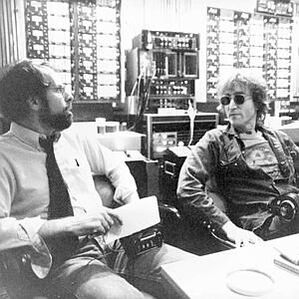
Bob was the chief pop music critic and pop music editor of the Los Angeles Times from 1970 through 2005, and is now writing books. A memoir, "Corn Flakes with John Lennon and Other Tales from a Rock 'n' Roll Life," was published in 2009. "Johnny Cash: The Life", is the definitive look at one of the most complex and influential artists ever in popular culture, followed in 2013. “Paul Simon: The Life” chronicled the life and creative process of one of America’s greatest songwriters, from “The Sound of Silence” through “Graceland” and beyond. It was published in 2018.
|
|
Bob did a series of interviews in 2006 with Danny Passman for Artists House Music. Danny was a producer and key interviewer for the site. He is now an entertainment lawyer at Gang, Tyre, Ramer & Brown, proudly working with his father, Donald S. Passman, a respected music industry attorney and author of "All You Need to Know About the Music Business," which Rolling Stone has called "required reading for anyone planning or enduring a career in the biz."
Listen Here
|
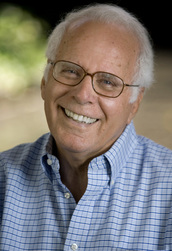
Mug shot by Jeff Amlotte,copyright 2009
|
Background Bob was born in rural Louisiana, where he grew up on the blues and country music styles that eventually gave birth to rock ‘n’ roll. His family moved to Southern California in the mid-1950s. After graduating from California State University, Northridge in 1961, Bob worked briefly at the Valley Times TODAY, a daily newspaper in Los Angeles' San Fernando Valley. Then he spent a few years as a public information officer for the Los Angeles Unified School District. In 1966 Bob realized he missed writing and that pop music was becoming such an exciting art form, thanks chiefly to Bob Dylan and the Beatles, that he wanted to get back into journalism. After freelancing for the Los Angeles Times for four years, Hilburn was hired as a full-time critic by the paper in the summer of 1970.
|
While at the Times, Bob was the only music writer to accompany Johnny Cash for his landmark Folsom Prison concert. Hilburn also went along with Elton John when he became the first Western rock figure to play in the Soviet Union, with Paul Simon on the “Graceland” tour stop in Zimbabwe, with Bob Dylan for his first concerts in Israel and with Michael Jackson on much of the Jacksons' Victory tour. Bob also spent a week on the road with the Sex Pistols during their first and only U.S. tour.
During his years at the Times, he was an early defender of rap when it was under attack by law enforcement agencies and members of Congress. Hilburn was a member of the nominating committee of the Rock and Roll Hall of Fame for more than 20 years. He lives in Los Angeles with his wife Kathi. He has two children, Kathy Morris and Rob Hilburn, and four grandchildren, Chris and Lindsey Morris and Genny and Grant Hilburn. Bob left the Times in 2006 to write books. |
Critical Philosophy "When I started writing about music, I thought of rock as an inevitable chain of events--much like thousands of dominoes in a line that neatly fell one after another once Elvis Presley and Chuck Berry helped kick things off. But I eventually realized that concept was naive. If you took away as few as two dozen artists from that endless row of dominoes, rock would have collapsed as an art form. Imagine your record collection without Bob Dylan, the Beatles or U2. Because of that, I felt one of the main challenges of a critic was to focus on those musicians who expanded the art form. In search of those artists, I have frequently ended up writing about false promises; artists who ran out of ideas, self-destructed or compromised their music in hopes of wider sales. But I was also fortunate enough to connect with many of the most important artists of the rock era.
"Interacting with those figures, I came to appreciate the tremendous toll that rock can take on an artist's personal life; how there is often far more drama off-stage than on. In the end, all it takes to be a star is luck and a commercial sound, which explains why we have so many mediocre hit-makers. To be a true artist, you need enormous talent, fierce ambition, an original vision and an unyielding toughness. I saw some artists |
triumph because they were tough and others die because they weren't tough enough.
"I've also spoken to thousands of fans about what they want from music. Some are just after entertainment; others respond to unchecked anger and rebellion or comfort and reassurance; still others like a band because their friends do; and there are those who value artists with the insight and craft to uplift and inspire us. No single rock diet works for everybody. We all have different musical DNA and we all follow different musical paths. Yet there is a unifying quality about rock 'n' roll that helped instill confidence and hope in millions of fans at times when little else in their lives made sense. "What linked Elvis Presley and Chuck Berry, Johnny Cash and Ray Charles, the Beatles and Bob Dylan was the old-fashioned American notion that each individual can make a difference, whether you are a truck driver from Memphis or a blind piano player from southwest Georgia. Rock 'n' roll was the promise of a better day and the best artists spread that message with an almost missionary zeal. I've always believed in that liberating message, which is probably why I responded most to artists who fought to keep the promise alive." |
Bob on the Radio
|
Follow Bob
|
